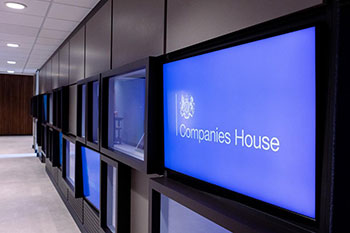
On 18 November 2025, mandatory ID verification for directors, persons with significant control (“PSCs”) and LLP members will come into force under the Economic Crime and Corporate Transparency Act (ECCTA). This is set to be the most substantial shake-up to UK corporate compliance in nearly two centuries.
The goal is clear: better regulation to strengthen transparency and accountability within the UK's business environment and to prevent misuse of corporate structures for illicit purposes. But with the clock ticking, awareness and readiness remain concerningly low.
A recent survey found almost 31% of UK directors were unaware of the ID verification deadline. At the beginning of November only one million (15%) of the estimated seven million affected individuals had completed verification.
That lack of urgency could soon cause major issues. While verifying directors is typically straightforward, identifying PSCs is far more complex, and mistakes can carry heavy consequences.
Companies House now actively engages with firms to verify PSC accuracy through its PSC Discrepancy Case Manager, meaning organisations must get compliance right — and fast.
The problem with PSCs
The law for PSCs was introduced in 2016 as part of the UK's efforts to increase corporate transparency. A PSC is anyone who:
- directly or indirectly holds more than 25% of shares and/or voting rights;
- directly or indirectly has the right to appoint or remove a majority of the board;
- exercises, or has the right to exercise, significant influence or control over a company's activities; and
- exerts such influence through a trust or firm that meets any of these conditions.
On paper, these definitions seem straightforward. In practice, they rarely are.
Many companies approached PSC registration as a box-ticking exercise, partly because enforcement has historically always been light.
While firms are legally required to take 'reasonable steps' to identify PSCs, there have historically been no meaningful penalties for getting it wrong, despite enforcement powers being available.
As a result, PSC information across the UK corporate register is often incomplete or inaccurate.
Corporate structures also evolve over time, whether through mergers, share restructures, or new investors, meaning that even firms that initially got it right may now have outdated information. Some may not even have the paper trail needed to revisit their original PSC assessments.
Simply put, companies may not know who their PSCs actually are. Less than half (47%) of UK directors believe they have correctly identified their PSCs, underscoring how common uncertainty really is.
The risks involved in identification
The ECCTA is changing that dynamic. Companies House now has enhanced investigative and enforcement powers, backed by a more proactive compliance regime.
Since 2021, the PSC Discrepancy Reporting Service has given officials powers to flag and investigate missing or inaccurate PSC information. The agency has also been clear that it intends to remove non-verified companies from the register after the deadline, regardless of any technical issues or delays.
This tougher stance is already visible. Over 11,500 companies have been struck off the register for listing bogus individuals such as 'Jesus Christ' and 'Mickey Mouse', signalling Companies House's determination to clean up the system.
Failing to properly identify and verify PSCs can lead to fines, restrictions on filing key documents, and even disqualification from the register. Beyond the legal risks, there are serious reputational and operational consequences: halted transactions, disrupted acquisitions, and scrutiny from investors, banks, and regulators. In short, ignorance is no longer an excuse.
Why early action matters
For many companies, verifying PSCs won't just be a matter of filling in forms. It may involve untangling ownership webs, tracing historic transactions, or even reviewing complex trust arrangements.
Using Authorised Corporate Service Providers (ACSPs) the process can be streamlined end-to-end, from identifying PSCs to conducting ID verification itself. This integrated approach can significantly reduce administrative strain and the risk of oversight.
Companies should also map entity structures across all jurisdictions to identify PSCs, directors, and limited liability partnership (LLP) members, including overseas individuals. These firms need to be reviewing and updating all ID and PSC records to make sure they are up to date – including flagging any gaps, inaccuracies and inconsistencies across group entities.
It is also crucial to provide proper training for directors and senior leaders on their new legal responsibilities under ECCTA to foster clarity and accountability, as they need to understand how best to navigate their new regulatory environment. Finally, companies should also implement ongoing monitoring to keep PSC information accurate as structures change.
Early compliance offers tangible benefits. It eliminates the stress of last-minute verification rushes and protects companies from penalties and operational disruption. Just as importantly, it strengthens governance frameworks and builds trust with clients, investors, and regulators.
Getting PSC identification right is not just about avoiding penalties; it's about demonstrating integrity, governance maturity, and operational excellence. Firms that act early will not only safeguard themselves from enforcement but also send a strong signal to stakeholders: that they are open, accountable, and ready to operate in the new era of corporate responsibility.
With just weeks until the identity verification deadline, one message is clear: don't wait. The time to act is now.
NOTE: The timetable for verification depends on a number of factors. Companies House confirmed the date when individual company directors need to verify identities depends on the due date of their company's next confirmation statement on or after 18 November 2025, so in some instances it would be as late as 17 November 2026. However, it is important to bear in mind that all new entities must comply from the moment they register for the first time at Companies House.
Bfn Accounts & Tax can assist directors and companies get compliant – contact details below.
Ashley Baldock - Ashley@bfn.com Colin French – Colin@bfn.com Peter Nichols – peter@bfn.com
Directors BFN Accounts & Tax Limited - www.bfnaccounts.com